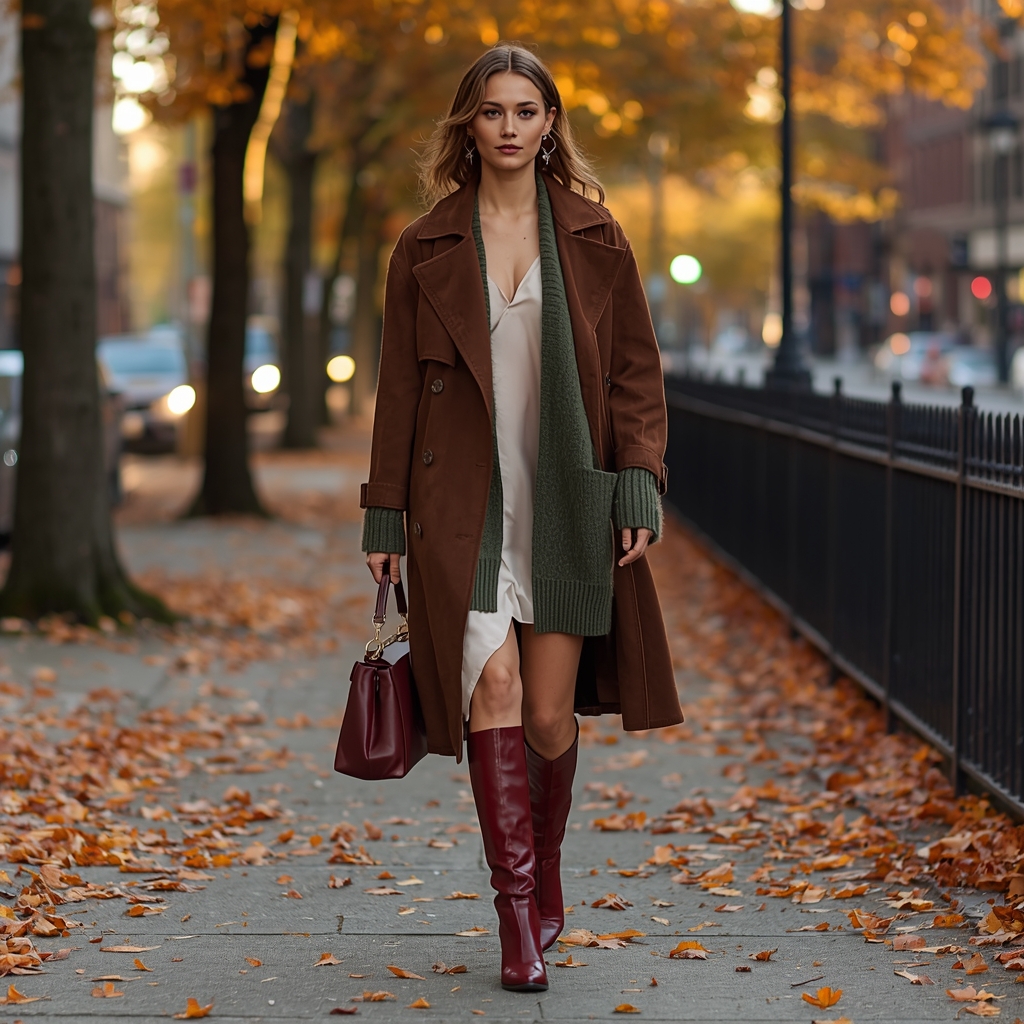
Fall is honestly one of my favorite seasons to dress for—but it took me a few years to get it right. I used to either overdress and feel sweaty by afternoon or underdress and regret it the moment the temperature dropped. Fall fashion looks effortless online, but in real life, it’s all about balance.
STYLORIAA LIFE finally worked for me wasn’t following trends blindly—it was understanding how to use them in everyday life. This guide is based on real outfits I’ve worn for work, errands, travel, and casual plans—plus mistakes I’ve learned the hard way.
1. The Real Secret: Fall Is About Smart Layering
Fall isn’t cold enough for heavy winter clothes, but it’s not warm enough for summer outfits either. That’s why layering becomes the foundation of everything.
From experience, the best fall outfits always follow this simple structure:
- Light base (T-shirt, tank, or blouse)
- Mid-layer (cardigan, shirt, or sweater)
- Outer layer (jacket or coat if needed)
This “layer system” works because you can adjust throughout the day. Fall weather changes quickly, so flexibility matters more than style trends.
2. Trend: Light Layers That You Can Actually Wear All Day


This is probably the most practical trend—and the one I use almost daily.
My go-to combination:
- Basic top or fitted T-shirt
- Long cardigan or light jacket
- Jeans or straight-leg trousers
- Sneakers or ankle boots
Why it works:
You can remove layers when it gets warm and put them back on in the evening.
Real-life example:
I wore this exact combination on a day out—morning coffee, afternoon shopping, evening dinner. I just adjusted layers instead of changing outfits.
3. Trend: Earth Tones (They Make Life Easier


I didn’t realize how helpful color choices were until I switched to fall tones.
Colors I now rely on:
- Beige
- Brown
- Olive green
- Rust
- Cream
These shades naturally match the season and are easy to combine. According to fashion guides, fall outfits often rely on warm hues and neutral tones because they mix well and create a balanced look .
Practical example:
A beige sweater + blue jeans + brown boots = effortless outfit without overthinking.
Mistake I made:
Trying bright summer colors in fall—they looked out of place and harder to match.
4. Trend: Oversized and Relaxed Fits
Oversized clothing used to feel too “messy” to me—but now it’s one of my favorites.
Interestingly, oversized fashion has become a major trend recently, with loose silhouettes becoming more popular for comfort and personal style .
What I wear:
- Oversized sweaters
- Loose blazers
- Relaxed hoodies
Why it works:
- Comfortable for long days
- Easy to layer underneath
- Doesn’t feel restrictive
Real-world use:
Perfect for travel days or long outings where comfort matters more than anything.
5. Trend: Mixing Textures (This Changed My Outfits Completely)


This is something I completely ignored before—and it made my outfits look flat.
Now I mix textures like:
- Knit + denim
- Leather + cotton
- Suede + wool
Stylists often suggest combining textures like knitwear, leather, or corduroy to add depth without making outfits too complicated .
Simple example:
Chunky sweater + leather skirt + boots → looks styled without extra effort.
6. Trend: Transitional Dresses (My Favorite Shortcut)


When I don’t want to think too much, I wear a dress.
Easy outfit:
- Midi or long-sleeve dress
- Cardigan or jacket
- Boots or sneakers
Why this works:
It’s a complete outfit with minimal effort. According to style guides, transitional dresses are a key fall staple because they can be layered easily and worn in different ways .
Real-life use:
I’ve worn this to work, dinners, and even casual outings just by changing shoes.
7. Trend: Boots + Practical Footwear


Fall is when footwear actually starts to matter.
What I rotate:
- Sneakers for casual days
- Ankle boots for cooler weather
- Slightly chunky boots for style + comfort
Why this matters:
Fall weather can be unpredictable—dust, light rain, uneven roads. Good shoes make a big difference in comfort.
8. My Minimal Fall Wardrobe (What I Actually Use)
After trying too many outfits, I simplified everything.
What I now keep:
- 3–5 basic tops
- 2 sweaters or cardigans
- 1–2 jackets
- 2 pairs of jeans or trousers
- 1–2 dresses
- 1 pair of boots + 1 sneakers
Why this works:
- Everything matches
- Less decision-making
- Faster outfit planning
9. Mistakes I Learned the Hard Way
1. Dressing for morning weather only
Fall temperatures change a lot during the day.
2. Wearing heavy fabrics too early
You don’t need winter clothes yet—light layers are enough.
3. Ignoring comfort
Tight or heavy outfits don’t work for long days.
4. Overcomplicating outfits
Simple combinations often look better and feel easier.
10. Step-by-Step: How I Plan My Fall Outfits
This is the exact method I follow now:
Step 1: Check the weather
Use a weather app (I use Google Weather) to see temperature changes.
Step 2: Pick a base outfit
Top + jeans, skirt, or dress.
Step 3: Add one layer
Cardigan, shirt, or sweater.
Step 4: Add outerwear if needed
Light jacket or coat.
Step 5: Choose footwear
- Sneakers → casual
- Boots → more polished or cooler weather
Step 6: Keep it adjustable
Make sure you can remove at least one layer.
11. Tools That Help Me Stay Consistent
I don’t rely only on memory anymore.
- Pinterest → for ideas (but I simplify them)
- Notes app → I save outfits that worked
- Weather apps → to plan ahead
- Wardrobe apps (optional) → to track combinations
These small tools help avoid repeating bad outfit choices.
What Actually Made the Biggest Difference
The biggest improvement didn’t come from buying new clothes. It came from understanding what works in real life.
- Choosing comfort first
- Using layers instead of heavy clothes
- Sticking to neutral and earth tones
- Repeating outfits that work
Once I stopped trying to create “perfect” outfits and focused on practical ones, everything became easier.
Closing Thoughts
Fall outfit trends can be helpful, but only when they fit your daily routine. Not everything you see online will work for real life—and that’s completely fine.
What matters is finding combinations that feel comfortable, easy to repeat, and suitable for your day. Once you figure that out, getting dressed becomes quicker, less stressful, and actually enjoyable.
After a few seasons of experimenting, I now rely on simple layering, neutral colors, and comfortable fits. It’s not complicated—but it works every single time.
Leave a Reply