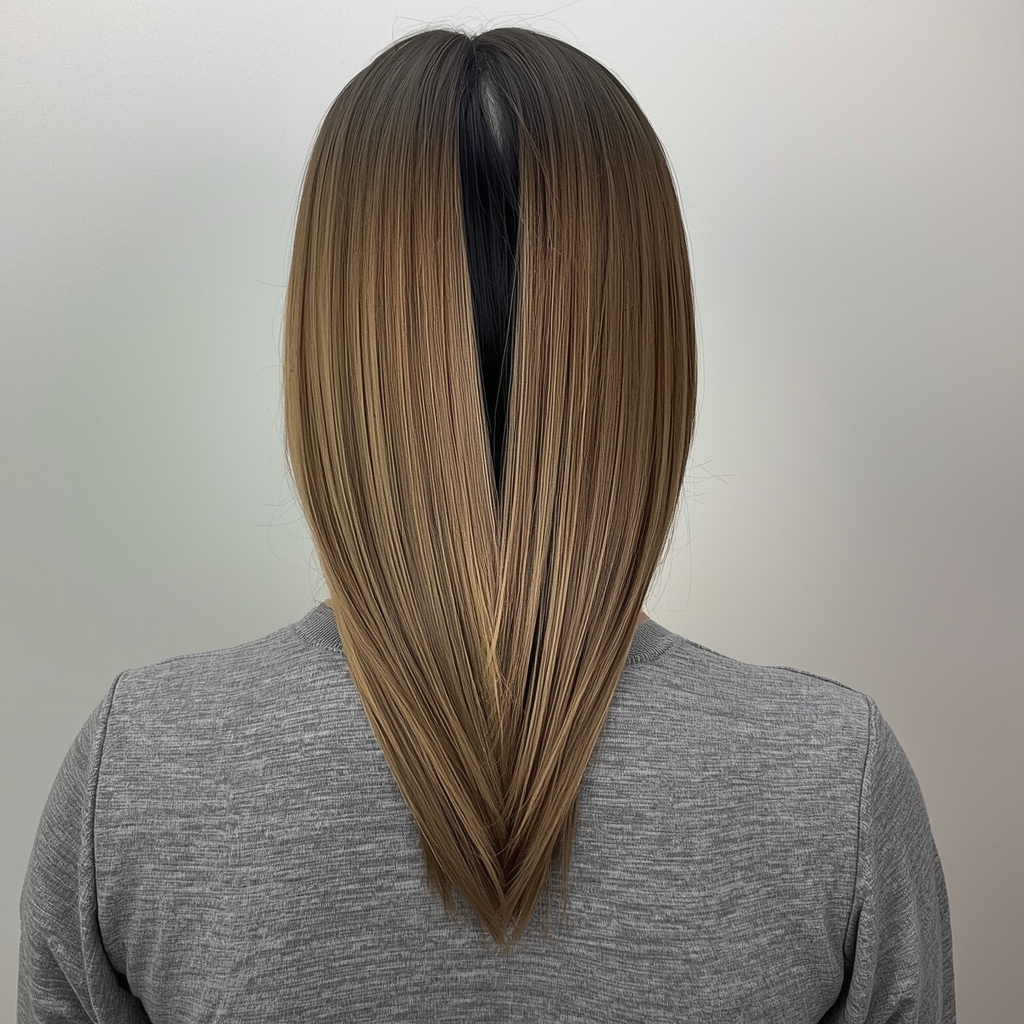
In the world of high-end hairstyling, few silhouettes command as much attention as the V-cut haircut. While blunt cuts offer precision and U-cuts offer softness, the V-cut is the undisputed queen of drama. It is a bold, architectural statement that transforms the back of your hair into a focal point, creating a sharp, tapered aesthetic that exudes confidence and “rock-roll” sophistication.
Once a staple of the early 2000s “supermodel” era, the V-cut has undergone a modern metamorphosis. Today’s version is less about severe, jagged edges and more about seamless graduation, internal texturizing, and movement. Whether you are a long-hair devotee looking to shake up your style or someone with thick hair struggling with unmanageable bulk, the V-cut might be the transformative solution you’ve been seeking.
In this professional guide, we will break down the anatomy of the V-cut, compare it to other popular hemlines, and provide the styling secrets necessary to keep this high-impact look at its best.
Anatomy of a V-Cut: The Art of the Point
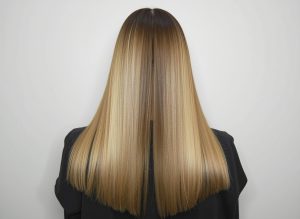
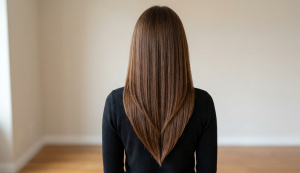
The V-cut is named quite literally for the shape it creates. When viewed from behind, the hair is cut at an angle so that the layers meet in a distinct, sharp point in the center of the back, resembling the letter “V.”
The technical execution of a V-cut involves heavy graduation. The hair closest to the face and shoulders is significantly shorter than the hair in the center of the back. This creates a dramatic “descending” line. Unlike a U-cut, which features a rounded, gentle curve, the V-cut utilizes straight, diagonal lines to achieve its signature point.
Because of this extreme graduation, the V-cut is inherently a layered style. It is almost impossible to achieve a true V-shape without incorporating face-framing layers and shorter pieces throughout the crown to support the dramatic taper at the bottom.
V-Cut vs. U-Cut vs. Blunt Cut: Which One Wins?
To choose the right haircut, you must understand how the hemline affects the behavior of your hair.
-
The Blunt Cut: This is a single, horizontal line. It is excellent for making fine hair look thicker, but on long, heavy hair, it can look “blocky” and static. It offers the least amount of movement.
-
The U-Cut: This is the “safe” middle ground. It removes some weight from the sides and offers a soft, feminine curve. It is versatile but lacks the high-fashion edge of the V.
-
The V-Cut: This is the choice for the maximalist. It removes the most weight from the sides, creates the most “swing” and movement, and offers the most dramatic visual change. However, it requires the most length to execute properly.
The Professional Benefits: Why Choose the V-Cut?
Why do stylists continue to recommend the V-cut despite the popularity of newer trends? The answer lies in its structural benefits.
1. The Ultimate Weight Remover
For individuals with high-density, thick, or “heavy” hair, the V-cut is a functional necessity. Thick hair often suffers from the “triangle effect,” where the hair poofs out at the bottom, creating a wide, bottom-heavy silhouette. By cutting the hair into a V-shape, you are essentially removing the “corners” of that triangle. This allows the hair to lay flatter against the back and feels significantly lighter on the head.
2. Maximum “Swing” and Flow
Because of the steep angles, the hair in a V-cut moves more freely than in any other style. When you walk or turn your head, the layers “cascade” over each other. It creates a dynamic, 3D effect that looks incredible in motion—making it a favorite for editorial photography and red-carpet events.
3. Elongating the Silhouette
The V-cut has a unique optical illusion: it makes the hair appear longer than it actually is. Because the eye follows the diagonal lines down to the center point, it creates a sense of verticality. This can make the wearer appear taller and their neck appear more elongated.
4. Integrated Face-Framing
The V-cut begins its tapering process near the front of the face. This means that face-framing layers—ranging from the cheekbones to the jawline—are built into the architecture of the cut. It’s an “all-in-one” style that ensures the front of your hair looks just as styled as the back.
Is the V-Cut Right for Your Hair Type?
While the V-cut is a showstopper, it isn’t a “one-size-fits-all” solution. Your natural hair texture and density play a massive role in whether this cut will succeed.
Best For: Thick and Coarse Hair
The V-cut was practically designed for thick hair. It utilizes the hair’s natural volume to support the shape. Without enough density, the “point” at the bottom can look like a thin “rat-tail.” On thick hair, however, it looks lush and intentional.
Proceed with Caution: Fine and Thin Hair
If you have fine hair, a dramatic V-cut can be risky. Because you are removing so much hair from the sides to create the point, you may end up with ends that look wispy and transparent. If you have fine hair but love the look, ask your stylist for a “Soft V” or a “Modified U-V” to maintain as much density as possible.
Texture Matters: Straight vs. Curly
-
Straight Hair: A V-cut on straight hair looks sharp, sleek, and almost futuristic. It highlights the precision of the cut.
-
Wavy/Curly Hair: A V-cut on curly hair is a revelation. It prevents curls from “stacking” and becoming too wide at the bottom. Instead, the curls cascade in a beautiful, tiered waterfall effect.
Customizing for Face Shapes
A professional V-cut should always be tailored to your facial geometry:
-
Round Faces: The V-cut is highly flattering for round faces because the “V” shape creates a vertical focal point that draws the eye down, slimming the face.
-
Heart-Shaped Faces: Keep the face-framing layers starting below the chin to avoid adding too much width to the forehead area.
-
Square Faces: Opt for a “Soft V” with feathered, wispy layers around the jawline to soften strong angles.
-
Long/Oval Faces: Be careful with extremely long V-cuts, as they can further elongate the face. Pairing the cut with a horizontal fringe (bangs) can help balance the proportions.
Styling Secrets: How to Wear the V-Cut
To get the most out of your V-cut haircut, your styling routine should emphasize the “tiered” nature of the layers.
1. The Cascading Curls (The Gold Standard)
This is the most popular way to style a V-cut. Using a 1.25-inch curling iron, curl your hair away from your face. Because the hair is shorter at the sides and longer in the back, the curls will “stack” on top of each other in a beautiful, organized way. It creates a voluminous, Hollywood-glamour look that a blunt cut simply cannot replicate.
2. The Sleek “A-Line” Straighten
When straightening a V-cut, use a flat iron to follow the angle of the cut. Point the ends slightly inward toward the center of the “V.” This creates a sharp, polished look that is perfect for professional environments.
3. The 90s Volume Blowout
Use a large round brush to dry the hair, focusing on lift at the roots. When you reach the ends, flick them slightly outward. This emphasizes the “feathered” layers that are a hallmark of the V-cut.
Maintenance: Keeping the Point Sharp
The V-cut is a high-maintenance shape. Because the point is so specific, even an inch of uneven growth can make the cut look lopsided.
-
Trim Schedule: To keep the V looking intentional, you should visit the salon every 6 to 8 weeks.
-
Watch the Ends: Because the V-cut tapers into a point, the very tip of the “V” is susceptible to split ends. Use a strengthening leave-in conditioner or hair oil daily on the bottom three inches of your hair to keep the point looking healthy and thick.
-
The Grow-Out: Growing out a V-cut into a blunt cut can be a long process. You will eventually have to cut the center point off to allow the sides to catch up. If you are someone who likes to change their hair every few months, the V-cut might be a significant commitment.
Conclusion
The V-cut haircut is not for the faint of heart. It is a style for the person who wants their hair to be their primary accessory. It offers unparalleled movement, removes weight like no other cut, and provides a dramatic silhouette that remains timeless despite changing trends. If you are ready to embrace the drama and have the hair density to support it, the V-cut is one of the most rewarding transformations you can experience. It’s time to turn your back to the world and show them exactly what a high-fashion hemline looks like.
Leave a Reply