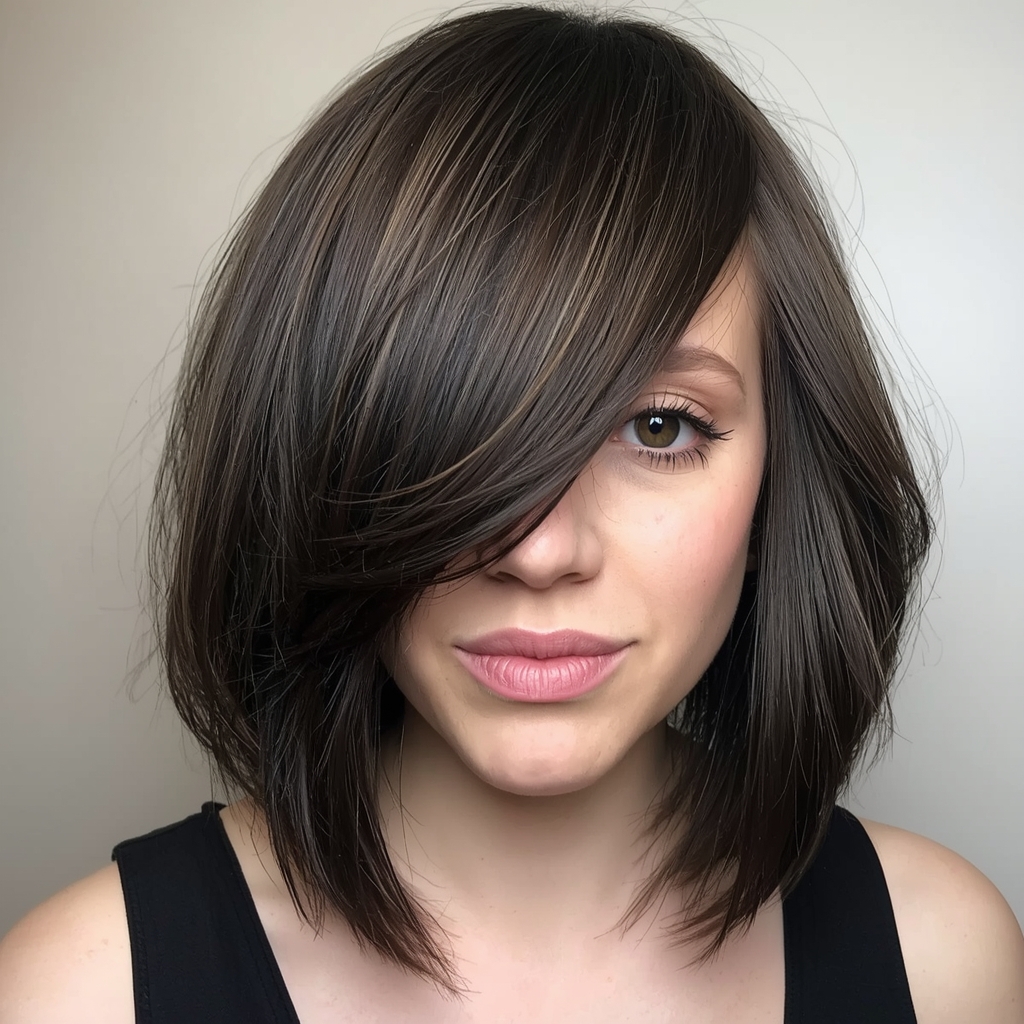
In the vast and storied history of hair design, the bob remains the undisputed foundation of style. From the rebellious flappers of the 1920s to the sleek, “glass-hair” icons of the modern era, the bob is a silhouette that refuses to fade. However, for those who find the classic, symmetrical bob a bit too “safe,” there is an avant-garde sister that offers drama, personality, and an undeniable edge: The Asymmetrical Bob.
The asymmetrical bob is more than just a haircut; it is a statement of intent. It challenges the traditional rules of facial symmetry and embraces a high-fashion, architectural aesthetic. Whether it is a subtle difference in length or a dramatic, high-contrast slant, this cut has become the go-to for individuals who want to project confidence and a modern, creative spirit.
In this professional guide, we will explore the nuances of the asymmetrical bob, from its historical roots and technical variations to the essential styling techniques required to maintain its sharp, intentional finish.
The Anatomy of the Asymmetrical Bob
By definition, an asymmetrical bob is a cut where one side of the hair is longer than the other. Unlike a “layered” cut or a “shag,” where the variation in length is distributed throughout the head, the asymmetry here is focused on the perimeter line.
The beauty of this cut lies in its “planned disconnection.” A professional stylist uses the facial features as a map, determining where the shorter side should end (usually around the chin or jawline) and how far the longer side should descend (often grazing the collarbone or even reaching the mid-neck).
There are three primary variations of this style:
-
The Subtle Asymmetry: A difference of only an inch or two between the sides. It provides a “hidden” edge that is only noticeable when the hair moves.
-
The Extreme Slant: A high-contrast cut where one side is a classic bob and the other is a long bob (lob).
-
The A-Line Asymmetry: A combination of a shorter back (stacked) and sides that are uneven in length, creating a 3D effect that looks different from every angle.
A Brief History: From Vidal Sassoon to the Red Carpet
While bobs became a symbol of women’s liberation in the 1920s, the asymmetrical bob as we know it today was largely pioneered by the legendary Vidal Sassoon in the 1960s. Sassoon viewed hair as a form of “living geometry,” and his sharp, geometric asymmetrical cuts revolutionized the industry, moving hair away from the stiff, set-and-spray styles of the 50s into something more structural and liberated.
In the early 2000s, the style saw a massive resurgence, famously dubbed the “Pob” (the Posh Bob) when Victoria Beckham debuted a sharp, blonde asymmetrical cut. Today, the look has evolved again. It is less about the “stacked” back of the 2000s and more about “sleek, blunt lines” and “natural, lived-in texture.” It is currently favored by celebrities and fashion-forward professionals who want a look that is both polished and rebellious.
Why the Asymmetrical Bob is a Stylist’s Favorite
From a professional standpoint, the asymmetrical bob is a “corrective” cut. It allows a stylist to use hair to balance out facial features in a way that a symmetrical cut cannot.
1. Balancing Facial Asymmetry
No one has a perfectly symmetrical face. We all have a “favorite” side or a side where our features (like an eye or a brow) sit slightly higher. An asymmetrical bob can be used to draw attention to the side you love most, or to create a visual balance that makes the overall face appear more proportional.
2. Enhancing the Jawline
The “shorter” side of an asymmetrical bob acts like a spotlight for the jawline and cheekbones. By cutting the hair shorter on one side, you expose the neck and the bone structure, providing an instant “facelift” effect.
3. Versatility of Expression
The cut can be styled to look incredibly professional and “corporate” when straightened, or wildly edgy and “rock-roll” when textured with waves. It is a chameleon cut that adapts to the wearer’s lifestyle.
Choosing the Right Cut for Your Face Shape
The key to a successful asymmetrical bob is the “starting point” of the shorter side and the “ending point” of the longer side.
-
Round Faces: To avoid adding width to a round face, the longer side should hit well below the chin to create a vertical, elongating effect. Avoid heavy, blunt bangs; instead, go for a deep side part that follows the line of the asymmetry.
-
Square Faces: If you have a strong jawline, a “Soft Asymmetrical Bob” is best. This involves texturizing the ends so the lines aren’t too severe. The layers should “hug” the jawline rather than cutting across it.
-
Heart-Shaped Faces: Since heart faces are wider at the forehead, pairing the asymmetrical bob with side-swept bangs can help balance the proportions. The longer side of the bob helps add “weight” to the narrower chin area.
-
Oval Faces: The oval face shape can handle the most extreme asymmetry. You can experiment with ultra-short “micro-bob” sides and much longer, cascading fronts.
Adapting the Cut to Hair Texture
Straight Hair: This is the “classic” way to wear an asymmetrical bob. Straight hair showcases the precision of the lines. However, it requires a very skilled stylist, as every “snip” is visible.
Wavy Hair: Wavy hair gives the asymmetrical bob a romantic, “boho” feel. The asymmetry adds a sculptural quality to the waves, preventing the hair from looking like a “wall” of texture.
Curly Hair: There is a common myth that curly hair shouldn’t be cut asymmetrically. On the contrary, an asymmetrical curly bob is stunning. It helps distribute the volume of the curls more evenly and prevents the “triangle” shape that often occurs with one-length curly cuts.
How to Style Your Asymmetrical Bob
A professional-grade asymmetrical bob requires specific styling to ensure the “asymmetry” looks intentional and not like a mistake.
1. The “Glass” Finish (Sleek and Straight)
-
Prep: Use a heat-protectant smoothing cream on damp hair.
-
Dry: Blow-dry using a paddle brush, pointing the nozzle downward to seal the hair cuticle.
-
Iron: Use a high-quality flat iron. The secret is to follow the line of the cut. For the longer side, iron the hair slightly inward toward the face.
-
Finish: Apply a shine spray or a drop of hair oil to the ends to emphasize the bluntness of the cut.
2. The Modern Texture (Messy and Edgy)
-
Prep: Use a volumizing mousse at the roots.
-
Dry: Rough-dry the hair with your hands until it’s 80% dry, then finish with a round brush for volume at the crown.
-
Curl: Use a 1-inch curling wand to create “flat-wrapped” waves (leaving the ends straight).
-
Finish: Use a dry texturizing spray. Shake the hair out and flip the deep side part over for maximum volume on the “long” side.
Maintenance: The Short Hair Commitment
The asymmetrical bob is a high-maintenance style. Because the lines are so specific, they require regular upkeep.
-
Trims: Expect to visit your stylist every 4 to 6 weeks. As the hair grows, the “balance” of the asymmetry shifts. The shorter side will eventually start to hit the shoulder, causing it to flip out and ruin the clean line.
-
Product Selection: Since this cut draws a lot of attention to the ends of the hair, you must keep them healthy. Regular deep-conditioning treatments are essential, especially if you are using heat to straighten the hair daily.
-
The “Deep Side Part”: Most asymmetrical bobs look best with a deep side part (starting above the outer corner of the eye). You may need to “train” your hair to stay in this part using a firm-hold hairspray or a few bobby pins at night.
Conclusion:
The asymmetrical bob is a celebration of individuality. It is a haircut for the person who isn’t afraid to be looked at, who values design over tradition, and who understands that hair is the ultimate accessory. It bridges the gap between the classic elegance of a bob and the rebellious spirit of an undercut. Whether you choose a subtle tilt or a dramatic slant, the asymmetrical bob provides a “custom-built” frame for your face that highlights your features and elevates your personal style.
Leave a Reply