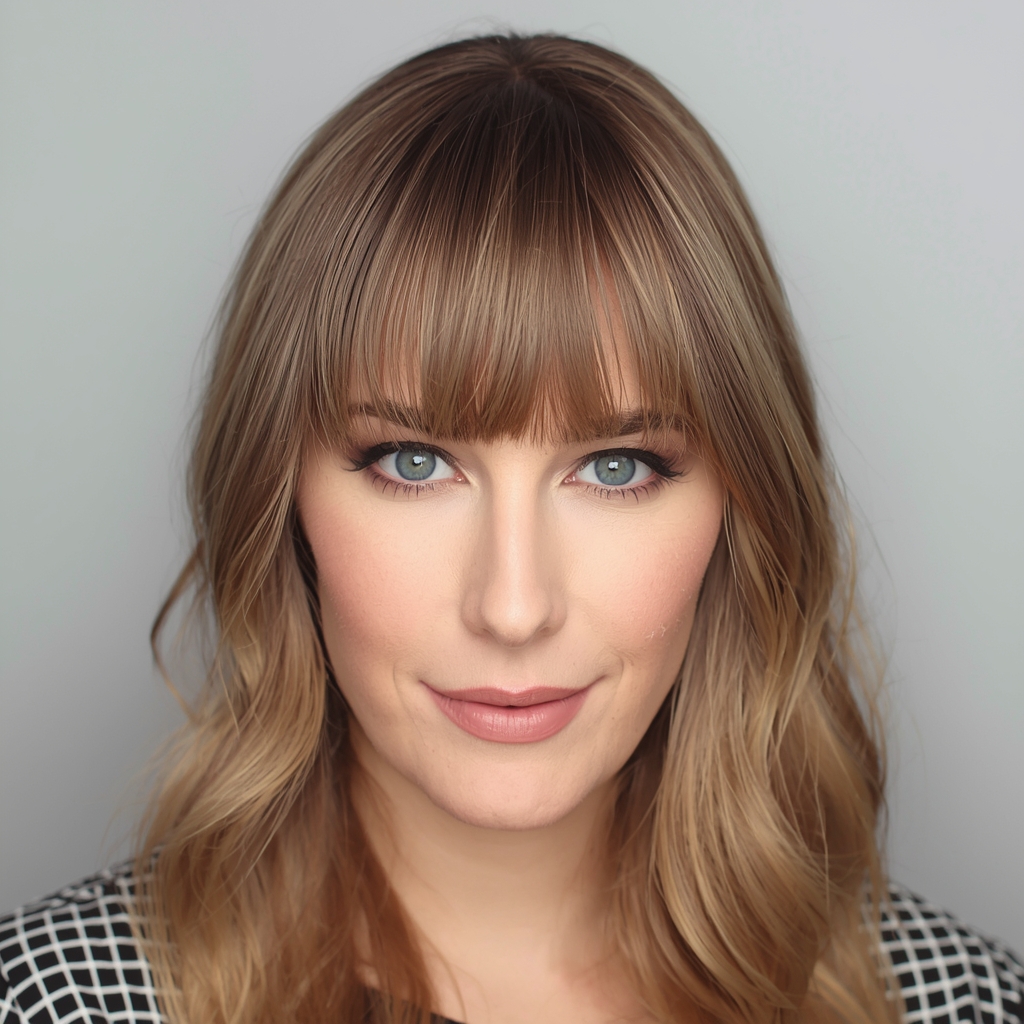
If you have spent any time on social media over the last few years, you have likely encountered the “Curtain Bangs Cut.” From Pinterest boards to TikTok transformations, this specific style of fringe has staged a massive global comeback, dethroning the blunt “Zooey Deschanel” bangs of the 2010s.
But curtain bangs are far from a modern fad. Originally popularized by icons like Brigitte Bardot in the 1960s and 70s, this cut has returned because it solves the age-old hair dilemma: how to change your look without committing to a high-maintenance, permanent fringe. It is the “gateway bang,” offering a soft, romantic, and incredibly flattering frame for almost every face shape.
What Exactly is a Curtain Bangs Cut?
As the name suggests, curtain bangs are inspired by window treatments. Instead of hanging straight across the forehead, they are parted—usually down the middle—and swept to each side.
The technical hallmark of a curtain bangs cut is its graduated length. The hair is shortest in the center (often hitting around the bridge of the nose or the eyebrows) and gradually gets longer as it moves toward the temples, eventually blending seamlessly into the rest of your layers. This “inverted-V” shape is what allows them to tuck behind the ears or blend into the hair when you want them out of your face.
The Universal Appeal: Why They Work for Everyone
The primary reason for the explosive popularity of curtain bangs is their sheer versatility. While blunt bangs can sometimes feel “heavy” or “harsh” on certain face shapes, curtain bangs are soft and customizable.
1. Face-Framing Magic
Curtain bangs act as a form of non-permanent contouring. By hitting at the cheekbones, they can accentuate your bone structure and draw attention to the eyes. For those with a broader forehead, they provide coverage while still showing off the face. For those with rounder face shapes, the diagonal lines created by the part help to elongate the face.
2. Low Commitment
The “bang regret” is a real phenomenon. Many people fear the months of awkward growth that follow a traditional fringe. Curtain bangs, however, are the easiest style to grow out. Because they are already integrated into your layers, they simply transition into face-framing layers as they grow, never reaching that “stiff” stage that straight-across bangs do.
3. Work with All Textures
Whether you have poker-straight hair, loose waves, or tight curls, curtain bangs can be adapted. On curly hair, they add volume and a beautiful “halo” effect. On straight hair, they provide much-needed movement and prevent the hair from looking flat.
How to Style the Perfect Curtain Bang
The secret to that “effortless” curtain bang look is, ironically, a little bit of effort. The goal is volume and a soft “flick” away from the face.
The Round Brush Technique
This is the gold standard. While your hair is damp, use a medium-sized round brush. Instead of brushing the bangs down, brush them forward (toward the mirror) and then blow-dry them up and away from your face. This creates that classic 70s lift at the root. Once dry, let them fall naturally to the sides.
The Velcro Roller Trick
For the most long-lasting volume, many stylists recommend the 90s-inspired velcro roller method. After blow-drying, roll your bangs forward and up into a large roller while they are still warm. Leave the roller in while you do your makeup. When you take it out, you’ll have a soft, bouncy swoop that lasts all day.
The Flat Iron “Flick”
If you prefer a more modern, slightly sleeker look, you can use a flat iron. Take your bangs in two sections, twist the iron away from your face as you glide through the hair, and let the ends flick outward. This creates a more defined, polished version of the cut.
Maintaining the Edge: Trims and Upkeep
While curtain bangs are lower maintenance than blunt bangs, they still require a bit more attention than a standard one-length cut. To keep them from getting in your eyes or losing their shape, a “bang trim” every 4 to 6 weeks is ideal.
Many salons offer complimentary or low-cost bang trims for existing clients because they only take five minutes. If you are tempted to trim them at home, remember the golden rule: Cut them while they are dry. Hair shrinks when it dries, and there is nothing more heartbreaking than cutting a “nose-length” bang only for it to jump up to your mid-forehead once it’s dry and styled.
How to Talk to Your Stylist
When you go in for a curtain bangs cut, communication is key. “Curtain bangs” is a broad term, so bringing a photo is essential. Here are a few things to consider:
Where do you want the shortest piece to hit? (The bridge of the nose is the most popular).
Do you want them to blend into layers? (This is best for a seamless look).
How much of a “gap” do you want? (Some people prefer a wider part, others prefer them to almost meet in the middle).
Final Thoughts
The curtain bangs cut is more than just a trend; it is a timeless technique that adds personality and softness to any hairstyle. It offers the drama of a fringe with the safety of a layer. If you have been looking for a way to refresh your look for the new season without sacrificing your length, the curtain bang is the ultimate solution. It’s chic, it’s retro, and most importantly, it makes every day feel like a good hair day.
Leave a Reply