In the world of professional hair design, trends often swing between extremes. For years, we saw a dominance of the Blunt Cut—the ultra-sharp, straight-across hemline that conveys precision and power. Then came the “V-Cut,” a high-drama, pointed style that defined the early 2000s rock-and-roll aesthetic. While both have their place in the style hall of fame, they often leave the modern client wanting something more versatile, more manageable, and more natural.
Enter the U-Cut.
Often described by stylists as the “Goldilocks” of hemlines, the U-cut is currently experiencing a massive resurgence. As the beauty industry shifts toward “Quiet Luxury” and effortless, “lived-in” hair, the U-cut has become the premier choice for those who want to maintain their length while injecting life, volume, and movement back into their locks.
In this comprehensive guide, we will explore the anatomy of the U-cut, why it is the ultimate choice for almost every hair type, and how to style it for maximum professional impact.
What Exactly is a U-Cut Haircut?
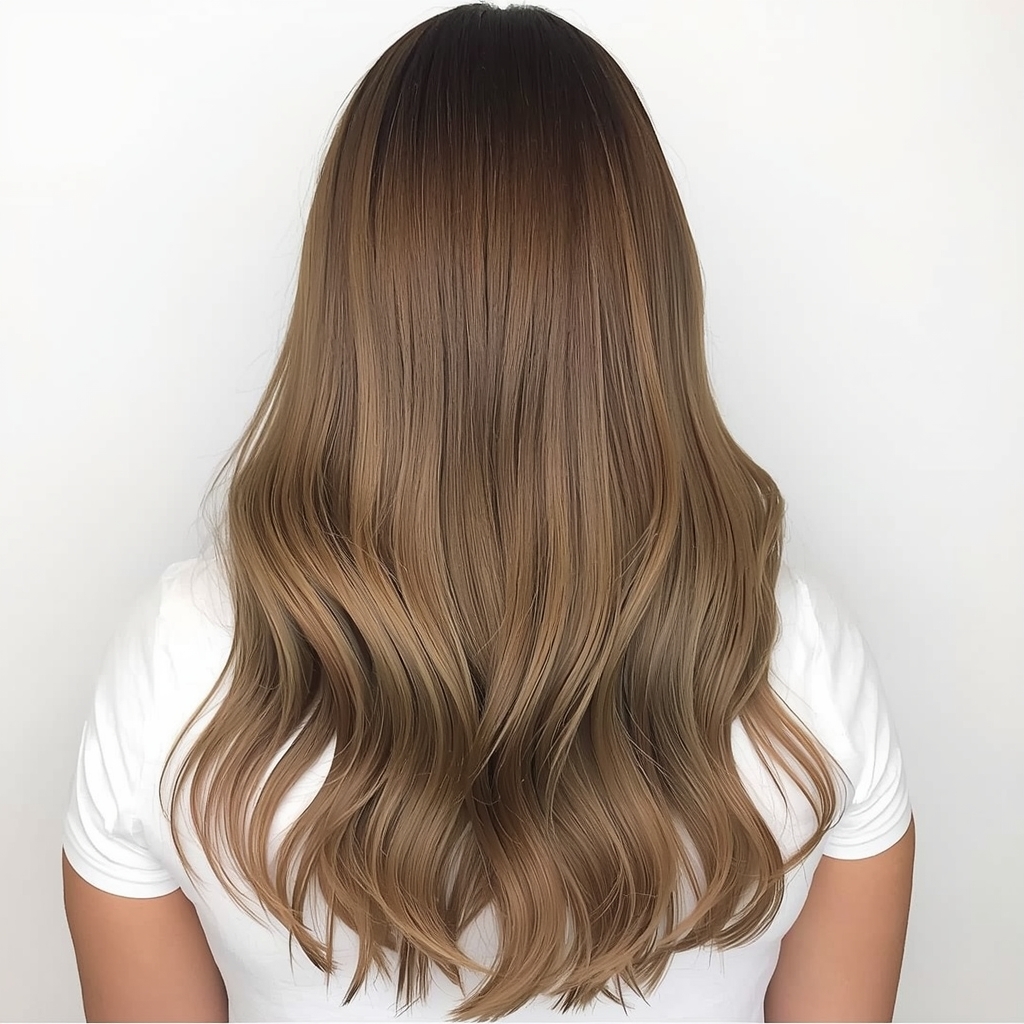
The name of the cut is derived from the shape the hair forms when viewed from the back. Instead of a straight horizontal line or a sharp, aggressive point, the hair is trimmed into a gentle, rounded curve that mimics the letter “U.”
In a professional U-cut, the hair is kept at its maximum length in the center of the back. As the stylist moves toward the shoulders and the face, the hair is gradually tapered into shorter lengths. This creates a seamless, cascading transition between the back of the hair and the face-framing layers in the front. The result is a silhouette that looks incredibly soft and organic, as if the hair has simply grown into a perfect, healthy shape.
U-Cut vs. V-Cut vs. Blunt Cut: The Comparative Analysis
To truly appreciate the U-cut, one must understand how it stacks up against its counterparts. Choosing a hemline is about more than just aesthetics; it’s about how the hair behaves in your daily life.
-
The Blunt Cut: This style features a single, solid line at the bottom. While it makes hair look incredibly thick and healthy, it can also feel “blocky” or heavy. On long, thick hair, a blunt cut can lack movement, often hanging like a heavy curtain.
-
The V-Cut: The V-cut is the most dramatic. It features layers that meet at a sharp, defined point in the center. While it provides a lot of “swing,” it has a significant downside: it can make the ends of the hair look thin or wispy. For clients with fine hair, a V-cut often results in a “straggly” appearance that requires constant trimming.
-
The U-Cut: The U-cut offers the best of both worlds. It maintains the density and “fullness” of a blunt cut at the center, while incorporating the light, airy movement of a V-cut at the sides. It is a more modern, sophisticated approach that prioritizes the appearance of hair health.
The Professional Benefits of the U-Cut
Why are top-tier stylists consistently recommending the U-cut to their long-haired clientele? The benefits are both structural and visual.
1. Instant Volume and “Lift”
One of the primary complaints from clients with long hair is that it feels “heavy” and flat at the roots. A blunt cut adds weight to the entire perimeter, pulling the hair down. The U-cut removes the “heavy corners” of the hair at the sides. This subtle removal of weight allows the hair at the crown to have more natural lift and bounce.
2. Seamless Face-Framing
Because the sides of a U-cut are intentionally shorter than the back, the cut naturally creates a “staircase” effect toward the face. This makes it incredibly easy for your stylist to blend the hemline into curtain bangs, chin-length layers, or “bottleneck” fringe. It ensures that your hair doesn’t just “hang” there; it actively frames your eyes and cheekbones.
3. Enhanced “Swish” Factor
In the world of hair, “movement” is the goal. A U-cut introduces graduation into the hemline. When you walk, turn your head, or toss your hair, the different lengths of the “U” shape slide against each other. This creates a fluid, dynamic look that appears much more high-end and “expensive” than a static blunt cut.
4. Reduced Bulk for Thick Hair
For those with high-density hair, the “triangle” effect is a common struggle—where the hair poofs out at the bottom. By rounding off the corners into a U-shape, the stylist removes the bulk that causes this widening, allowing the hair to lay flatter and more elegantly against the back.
Tailoring the U-Cut to Your Hair Type
One of the greatest strengths of the U-cut is its universal appeal. However, the execution must be tailored to your hair’s natural texture to avoid common pitfalls.
For Fine Hair:
Many people with fine hair avoid layers because they fear losing “thickness.” The U-cut is actually a secret weapon for fine hair. By creating a rounded hemline, you create the illusion of a thicker base. A professional stylist will keep the “U” curve shallow (a “Soft U”) to ensure the ends stay looking dense and healthy while still enjoying the benefits of movement.
For Thick and Coarse Hair:
If you have a “mane” of hair, the U-cut is a necessity for manageability. It allows the stylist to use texturizing shears or a razor to remove internal weight without sacrificing the overall length. This makes blow-drying faster and keeps the hair from feeling like a burden.
For Curly and Wavy Hair:
The U-cut is arguably the best hemline for curls. Curls need room to “stack” on top of each other to avoid the dreaded pyramid shape. The rounded perimeter of the U-cut provides the perfect architecture for curls to bounce and define themselves. It prevents the curls from looking weighed down and encourages a more balanced, voluminous shape.
Matching the U-Cut to Face Shapes
A professional haircut is essentially a form of “facial contouring.” The depth of your U-cut can be adjusted to balance your proportions:
-
Round and Square Faces: A deeper, more elongated “U” (where the difference between the front and back lengths is significant) creates vertical lines. This has a slimming effect and helps elongate the neck.
-
Long or Oval Faces: A shallower, wider “U” (approaching a “soft blunt” look) is ideal. By keeping the length more consistent around the shoulders, you add a bit of width that balances out a longer face shape.
Styling Tips: How to Showcase Your U-Cut
A U-cut is designed to look good air-dried, but it truly shines with a bit of intentional styling.
1. The “90s Supermodel” Blowout
This is the ultimate way to show off a U-cut. Use a large round brush to dry the hair in sections. As you reach the ends, roll the brush away from your face. Because the hair is cut in a curve, the ends will “feather” beautifully, creating a voluminous, layered look that highlights the U-shape.
2. The Polished S-Wave
Use a 1.25-inch curling iron or wand. When you curl the hair, leave the last inch of the ends straight. Because the U-cut has varied lengths, these waves will fall at different levels on your back, creating a 3D effect that looks much more sophisticated than curls on a blunt cut.
3. The Sleek Look
Even when straightened, the U-cut looks superior. A blunt cut can sometimes look like a “blanket” when straightened, but a U-cut maintains a soft, tapered edge that looks more natural and less severe.
Maintenance and Upkeep
The U-cut is a low-maintenance style, which is part of its widespread appeal. Because the transition between lengths is so gradual, the “grow-out” phase is seamless. You won’t experience the awkward, jagged stages that often come with growing out more aggressive layered styles like the shag or the V-cut.
-
Trim Frequency: To keep the “U” shape crisp and the ends healthy, a professional trim every 10 to 12 weeks is usually sufficient.
-
Product Recommendation: Since the U-cut draws the eye to the perimeter of your hair, it is vital to keep your ends hydrated. Use a high-quality hair oil or a “split-end mender” on the last two inches of your hair daily to maintain that sleek, professional finish.
Conclusion: Why the U-Cut is the Ultimate Investment
The U-cut is more than just a trend; it is a foundational haircut that prioritizes the two things every client wants: length and health. It is the “Quiet Luxury” of the hair world—it doesn’t scream for attention with radical angles, yet it looks undeniably expensive and well-maintained.
Whether you are a long-hair devotee looking to refresh your style or someone looking to transition from a blunt bob to something more fluid, the U-cut provides the perfect structural base. It is a timeless, feminine, and practical choice that works with your hair’s natural movement rather than against it.
Leave a Reply to The V-Cut Haircut The Ultimate Guide to Drama, Movement, and Edge – Cancel reply