In the fast-paced world of hair aesthetics, where “viral” trends like the wolf cut or the butterfly layers seem to dominate social media feeds every other week, there is one silhouette that remains untouchable. It is the architectural marvel of the hair world: The Blunt Bob.
Characterized by its razor-sharp edges and an absolute refusal to incorporate traditional layers, the blunt bob is more than just a haircut. It is a stylistic statement of precision, health, and confidence. Whether it’s seen on a high-fashion runway or in a high-stakes boardroom, the blunt bob conveys a sense of intentionality that few other styles can replicate.
Defining the Blunt Bob: Geometry in Motion
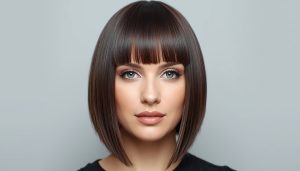
At its most fundamental level, a blunt bob is a short-to-medium length haircut where the hair is cut to a uniform length in a straight, horizontal line. Unlike the “A-line” bob (which is shorter in the back) or the layered bob (which focuses on movement and volume), the blunt bob is about the “weight line.”
To achieve this, stylists use a “zero-elevation” technique. The hair is not pulled up or out during the cutting process; instead, it is combed flat against the skin and sliced with surgical precision. This creates a thick, heavy perimeter that makes the hair appear significantly denser and healthier. For those struggling with thin or fine strands, the blunt bob is the ultimate illusionist, providing a level of “heft” that layers would otherwise strip away.
Why the Blunt Bob Suits (Almost) Everyone
One of the most enduring myths in the beauty industry is that a blunt cut is “too harsh” for certain face shapes. In reality, the blunt bob is incredibly versatile; the secret lies in where the line is drawn.
1. The Jaw-Length Classic
For individuals with oval or heart-shaped faces, a bob that hits exactly at the jawline acts as a frame, highlighting the bone structure and drawing attention to the lips and chin. It is a bold, “French-girl” inspired look that feels both vintage and incredibly modern.
2. The Power “Lob” (Long Bob)
For those with round or square face shapes, the blunt line should fall an inch or two below the jaw, closer to the collarbone. This “Lob” length provides a vertical elongation that slims the face while maintaining the chic, weighted ends of a blunt cut.
3. Texture and Density
While the blunt bob is the “holy grail” for fine hair, those with thick hair can also wear it beautifully. A skilled stylist will “internalize” the weight—thinning out the hair from underneath—so the exterior remains a sharp, solid line without the hair looking too triangular or “poofy.”
The Styling Spectrum: From Glass Hair to Gritty Texture
The beauty of the blunt bob is that its simplicity acts as a canvas. You can change your entire “vibe” simply by changing your styling tools.
The “Glass Hair” Aesthetic
This is the most iconic iteration of the blunt bob. To achieve this, the hair must be bone-straight and highly reflective. The process involves a high-quality heat protectant, a precise flat-iron pass, and a finishing touch of light hair oil or shine spray. Because there are no layers to break up the surface, the light reflects off the hair in a solid sheet, creating a luxurious, expensive-looking finish.
The Modern “S-Wave”
Don’t be fooled into thinking a blunt cut is only for straight hair. Adding a soft, flat-iron wave—where the ends are left intentionally straight—creates a contemporary, “cool-girl” texture. Because the ends are blunt, the waves look chunky and deliberate rather than wispy. This is the perfect look for a casual weekend or a creative office environment.
The Deep Side Part
If you want to inject instant drama into your bob, shift your parting. A deep side part creates a voluminous “swoop” that adds height to the crown and a touch of Hollywood glamour to the sharp edges below.
Maintenance: The Price of Perfection
While the blunt bob may simplify your morning routine, it does require a commitment to the salon chair. Because the appeal of the cut lies in its geometric accuracy, the “grow-out” is more noticeable than it is with a layered cut.
To keep the edge looking crisp, a trim every 6 to 8 weeks is recommended. Once the ends begin to split or weather, the “blunt” impact is lost. Additionally, because the ends are the star of the show, keeping them hydrated is vital. Regular use of a nourishing hair mask will ensure your weight line looks healthy and intentional rather than dry or frayed.
The Psychological Power of the Cut
There is an undeniable psychological component to the blunt bob. In the history of cinema and fashion, the bob has often been used to signify a turning point—a moment where a character takes control of their life. From the 1920s flappers who cut their hair as a sign of liberation to the modern “power bob” worn by CEOs, this haircut radiates authority.
It is a “low-noise” hairstyle. It doesn’t rely on the “smoke and mirrors” of curls or layers; it stands on its own merits. When you wear a blunt bob, you are telling the world that you value clarity, precision, and a minimalist aesthetic.
Final Thoughts
The blunt bob is a rare trend that transcends the “fast fashion” cycle. It is a staple—the “little black dress” of the hair world. Whether you are seeking a dramatic “reset” for damaged hair or you simply want a look that commands respect, the blunt bob is a flawless choice. It is a testament to the fact that sometimes, the simplest lines are the most powerful ones.
Leave a Reply to The Art of the Layered Cut Elevating Volume, Movement, and Style – Cancel reply