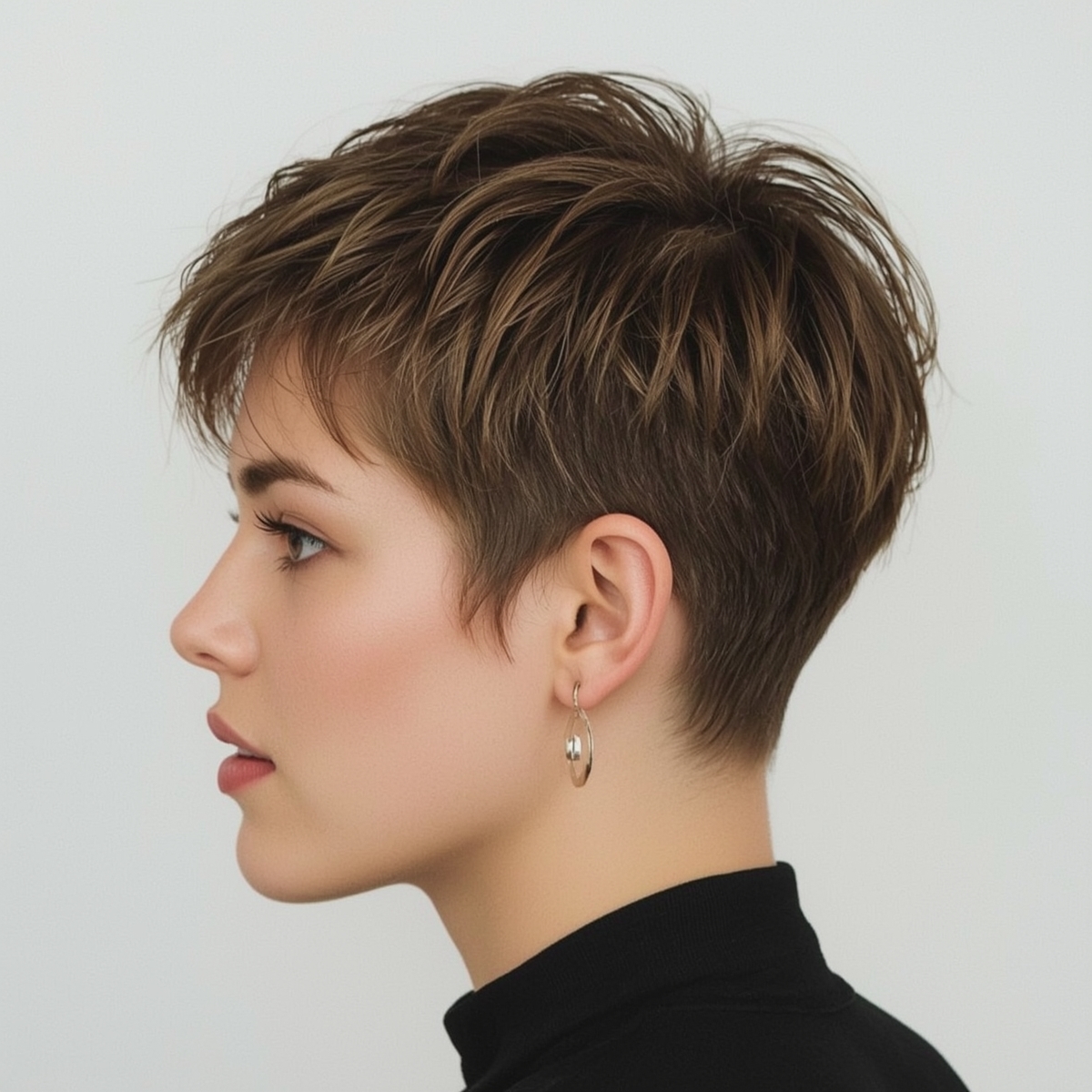
In the vast lexicon of hairstyling, few terms carry as much weight, history, and transformative power as the Pixie Cut. To choose a pixie is to do more than simply change a look; it is an act of liberation, a celebration of facial architecture, and a definitive style statement that says, “I have nothing to hide.”
While long waves and mid-length bobs often dominate the mainstream, the pixie cut remains the gold standard for those seeking a blend of high-fashion edge and effortless practicality. From the gamine elegance of the 1950s to the textured, edgy iterations of the 2020s, this short style has proven itself to be remarkably resilient and infinitely adaptable.
If you are considering “the big chop,” or if you are a professional looking to deepen your understanding of this iconic silhouette, this comprehensive guide explores the nuances of the modern pixie cut.
The Heritage of the Pixie: From Rebellion to Red Carpet
The pixie cut first pierced the collective consciousness in the early 1950s. Most famously, Audrey Hepburn donned a short, cropped style in the film Roman Holiday, symbolizing her character’s break from royal tradition and her embrace of personal freedom. Shortly after, in the 1960s, Mia Farrow and the supermodel Twiggy cemented the pixie as a symbol of the “youthquake” movement, challenging traditional notions of femininity with a look that was sleek, boyish, and undeniably chic.
In the decades that followed, the pixie evolved. In the 80s, it took on sharp, geometric angles; in the 90s, it became soft and “waif-like”; today, it is characterized by its versatility, incorporating elements of undercuts, shags, and even vibrant color theory. It remains a favorite on red carpets because it draws the viewer’s eye exactly where a stylist wants it: the cheekbones, the jawline, and the eyes.
Anatomy of a Pixie: Understanding the Variations
A “pixie” is not a single haircut; it is a category. Depending on how the weight is distributed and the tools used, a pixie can look radically different from person to person.
1. The Classic Pixie
The classic pixie is characterized by short hair on the back and sides and slightly longer hair on top, usually with very short bangs. This is the “gamine” look. It is best suited for those with fine to medium hair textures and features that they want to highlight, such as a strong brow or high cheekbones.
2. The Long Pixie (The “Bixie”)
The “Bixie” is a contemporary hybrid of a bob and a pixie. It offers more length around the ears and a shaggier, more layered top. This is the ideal “bridge” haircut for someone transitioning from long hair to short, as it provides enough length to tuck behind the ears and offers a softer, more romantic silhouette.
3. The Textured or Shaggy Pixie
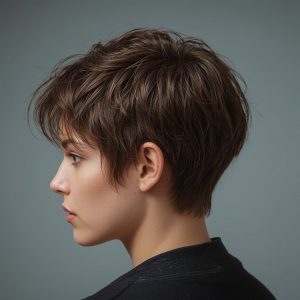
Borrowing elements from the popular “wolf cut” or “shag,” this version utilizes heavy layering and razor-cut ends to create a messy, lived-in feel. It is the ultimate low-maintenance version of the pixie, as it relies on natural movement rather than precision styling.
4. The Undercut Pixie
For those who want an edgier, more architectural look, the undercut pixie involves shaving or closely clipping the hair on the sides and back while leaving the top significantly longer. This creates a dramatic contrast in lengths and allows for a variety of styling options—from a sleek side-sweep to a voluminous pompadour.
Matching the Pixie to Your Face Shape
The most common concern regarding short hair is: “Can I pull it off?” The answer is almost always yes, provided the cut is tailored to the geometry of the face.
-
Round Faces: To balance a rounder face, a pixie should have height and volume at the crown. This elongates the head’s appearance. Incorporating side-swept, asymmetrical bangs can also break up the roundness and create sharper angles.
-
Square Faces: The goal here is to soften the jawline. A shaggy or textured pixie with feathered layers around the ears and forehead works best. Avoid blunt, straight-across bangs, which can emphasize the boxiness of the face.
-
Heart-Shaped Faces: Since heart shapes are wider at the forehead and narrower at the chin, a pixie with side-swept bangs helps minimize the width of the forehead. Keeping the hair close to the sides of the head helps maintain balance.
-
Oval Faces: This face shape is the “universal” canvas for short hair. From a micro-pixie to a long, layered bixie, an oval face can carry virtually any variation of the cut.
The Psychology of “The Chop”
Beyond aesthetics, cutting one’s hair into a pixie often carries psychological significance. For many, long hair acts as a “security blanket.” Removing it can feel like a shedding of old identities or a reclamation of self. Professionally, a pixie cut often conveys confidence and competence. It suggests a person who doesn’t have time to hide behind their hair and who is comfortable being the center of attention.
Styling and Product Selection: The Professional Toolkit
A pixie cut may require less time to dry, but it requires specific styling to ensure it looks “done” rather than “disheveled.”
-
Texture is Key: For most pixies, a matte pomade or styling wax is essential. These products allow you to define individual layers and prevent the hair from looking like a single, solid “helmet.”
-
Volume vs. Smoothness: If you are going for a sleek look, a lightweight hair oil or serum will provide shine and control. If you want volume, a root-lifting spray or volumizing mousse applied to damp hair is the foundation you need.
-
The Blow-Dry Technique: While you can air-dry a textured pixie, using a blow dryer with a concentrator nozzle or a small round brush allows you to direct the hair and “lock” the shape into place.
-
Heat Protection: Just because the hair is short doesn’t mean it’s immune to damage. Always use a heat protectant if you are using a flat iron to detail your bangs or a blow dryer on high heat.
Maintenance: The Short Hair Commitment
One of the most important things to understand before committing to a pixie cut is the maintenance schedule. While you will save hours every month on washing and drying, you will spend more time at the salon.
To keep a pixie looking intentional and sharp, you should expect to visit your stylist every 4 to 6 weeks. Short hair shows growth much faster than long hair. Once the hair around the ears and the nape of the neck begins to “flip” or lose its shape, the entire silhouette changes.
However, the “grow-out” process of a pixie can also be an enjoyable style journey. By transitioning from a classic pixie to a bixie, and then to a bob, you can experience a variety of different looks within a single year.
Breaking the “Short Hair is Masculine” Myth
In professional beauty circles, the idea that short hair is inherently masculine is a dated concept. The modern pixie cut is often used to emphasize femininity by exposing the neck—one of the most elegant parts of the human anatomy—and drawing focus to the delicate features of the face. By playing with fringe length, texture, and color (such as soft pastels or platinum blonde), a pixie can be as soft, romantic, or feminine as any long-haired style.
Is the Pixie Cut Right for You?
Conclusion:
The pixie cut is more than just a trend; it is a classic that reinvents itself every decade. It is a style for the bold, the busy, and the brave. It simplifies your morning routine while magnifying your presence in a room. If you find yourself constantly pinning your hair back, if you feel weighed down by your current length, or if you simply want a change that feels like a fresh start, the pixie cut is waiting. It is a haircut that demands to be seen, and more importantly, it allows you to be seen.
Leave a Reply