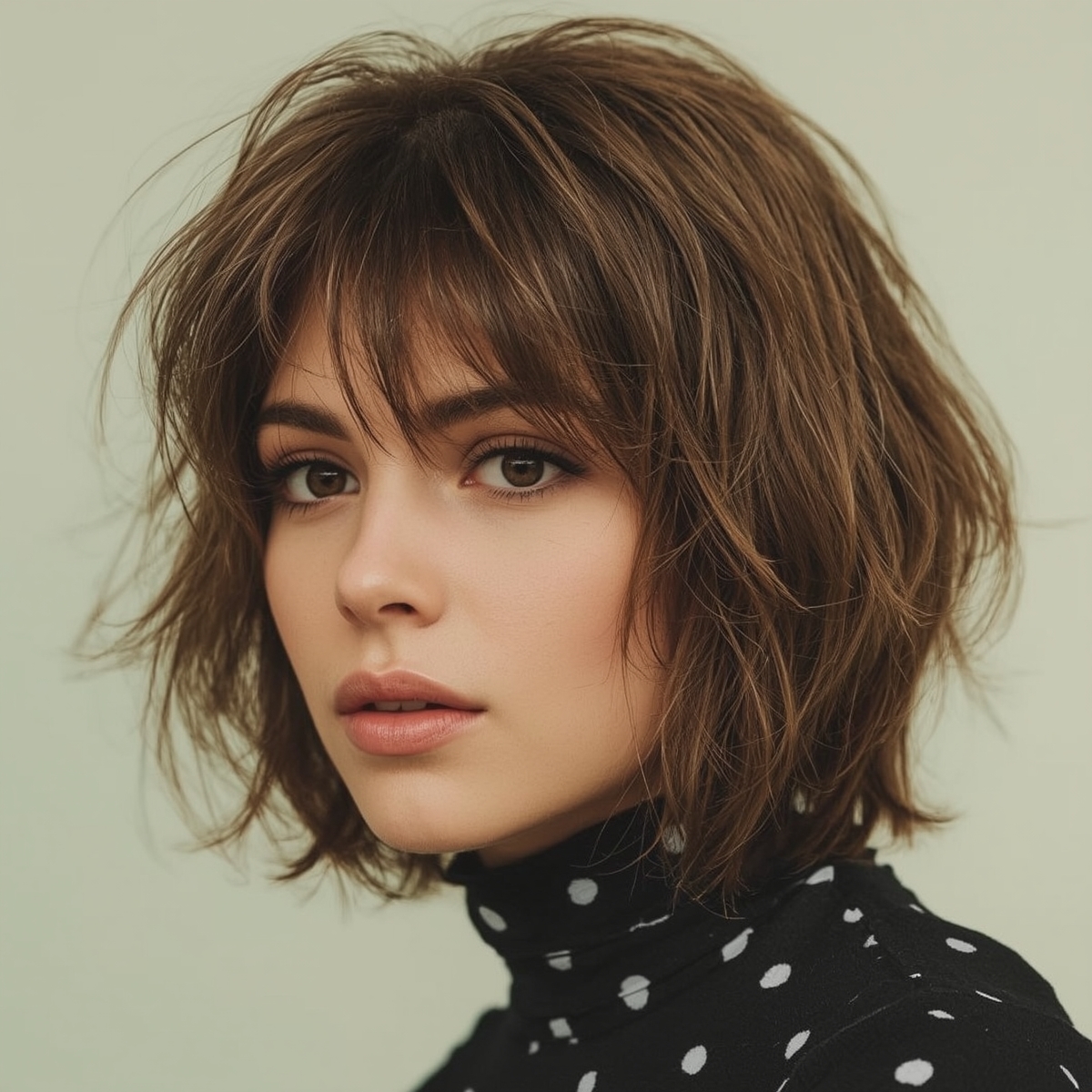
In the world of professional hair styling, few trends possess the staying power and transformative energy of the Shag Haircut. Once the calling card of 1970s rock legends and rebellious icons, the shag has undergone a sophisticated evolution. Today, it stands as the ultimate “it-girl” style, favored by celebrities, influencers, and high-fashion editorial stylists alike.
The beauty of the modern shag lies in its contradictions: it is both messy and deliberate, edgy and soft, vintage and futuristic. But what exactly defines a shag in the 2020s, and why has it become the most requested service in salons from London to Los Angeles? This guide will delve deep into the anatomy, history, and styling of the shag haircut, proving why this look is the perfect choice for your next transformation.
The Anatomy of a Shag: What Makes it Unique?
At its most basic level, a shag haircut is defined by heavy layering. However, unlike standard long layers that aim for a seamless, blended flow, the shag thrives on visible texture and intentional “disconnection.”
The hallmark features of a shag include:
-
A Strong Fringe: Most shags are accompanied by a bang, ranging from wispy curtain bangs to thick, “bottleneck” fringe that frames the eyes.
-
Short Layers at the Crown: This provides immediate volume and lift, preventing the hair from looking flat or “triangle-shaped.”
-
Feathered Perimeters: The ends are typically thinned out or “shattered” to create a light, airy movement rather than a blunt, heavy line.
-
Face-Framing Tendrils: Layers are cut to hit the cheekbones and jawline, acting as a natural form of contouring for the face.
A Brief History: From Mick Jagger to Zendaya
The shag was born in the late 1960s, credited largely to barber Paul McGregor. He famously created the look for Jane Fonda in the film Klute, a move that shifted the cultural landscape away from the stiff, hairsprayed bouffants of the previous decade.
In the 70s, the shag became a gender-neutral symbol of rock-and-roll rebellion. It was worn by Mick Jagger, David Bowie, and Joan Jett, signaling a move toward “wash-and-wear” hair. In the 90s, the style resurfaced in a more polished form—most notably “The Rachel,” Jennifer Aniston’s iconic cut on Friends, which utilized the shag’s layering principles with a sleeker finish.
Today’s shag is a hybrid. It takes the grittiness of the 70s, the volume of the 90s, and adds modern techniques like razor cutting and balayage to create a look that feels fresh and effortless.
The Modern Variations
One of the reasons the shag haircut remains a professional favorite is its ability to be customized. Here are the three most popular iterations seen today:
1. The Wolf Cut
As a direct descendant of the shag, the wolf cut leans into the mullet aesthetic. It features even shorter layers around the crown and a more dramatic transition to the lengths. It is the “edgiest” version of the shag, perfect for those who want to lean into a punk-rock aesthetic.
2. The Curly Shag
Perhaps the most significant development in recent years is the rise of the curly shag. For decades, those with curls were told to avoid short layers to prevent “poofiness.” The modern shag turns that rule on its head. By strategically removing weight, a stylist can create a halo of curls that has incredible shape, bounce, and personality.
3. The “Long Shag” (The Shullet)
For those hesitant to lose their length, the long shag offers the best of both worlds. It maintains the length at the back while introducing heavy face-framing and crown layers. This version is often styled with soft, beachy waves for a more “Boho-chic” vibe.
Choosing the Right Shag for Your Face Shape
A professional haircut is never “one size fits all.” A skilled stylist will adjust the layers of a shag to compliment your specific facial structure.
-
Round Faces: To elongate the face, your stylist will focus on adding height at the crown and keeping the side layers slightly longer. Narrow, “curtain” bangs that start at the cheekbones can help create an oval illusion.
-
Square Faces: The goal here is to soften the jawline. Wispy, feathered layers that “hug” the face are ideal. Avoid blunt bangs; instead, opt for a side-swept or rounded fringe.
-
Heart-Shaped Faces: Since heart shapes are wider at the forehead, a thick, choppy fringe can help balance the proportions. Layers should flip outward at the chin to add width to the lower half of the face.
-
Oval Faces: The oval face shape is the “universal” canvas for the shag. You can experiment with ultra-short “baby bangs” or extreme, choppy layers without fear of throwing off your proportions.
The Professional Technique: Razor vs. Shears
When you go to the salon for a shag haircut, the tool your stylist chooses will dictate the final texture.
-
Razor Cutting: Many “shag specialists” prefer a straight razor. The razor carves into the hair, creating soft, tapered ends that look “lived-in” from day one. This is excellent for thick hair as it removes bulk and adds incredible movement.
-
Point Cutting (Shears): For those with fine or fragile hair, traditional shears are often safer. The stylist will use a “point-cutting” technique, cutting into the ends at an angle to create texture without thinning the hair out too much.
Styling the Shag: The Professional Secret
The allure of the shag is that it looks low-maintenance. While the cut does a lot of the work, the right products are essential to keep it from looking simply “messy.”
1. The Foundation: Volume
Start with a volumizing spray or mousse on damp hair. Focus on the roots at the top of your head to maintain that signature shag lift.
2. The Fringe: Control
Always style your bangs first. Use a medium-sized round brush and a blow dryer to “set” them. If they are curtain bangs, dry them away from the face to create that classic 70s swoop.
3. The Texture: Grit
Once the hair is dry, you need to add “grit.” A dry texture spray or a sea salt spray is non-negotiable. Lift sections of the hair and spray from the bottom up. Scrunch the hair with your hands to encourage the layers to separate.
4. The Finish: Definition
If your hair tends to get frizzy, use a tiny amount of hair paste or pomade. Rub it between your palms and “pinch” the ends of your layers. This gives the hair a piecey, intentional look rather than a frizzy one.
Maintenance and Growth
One of the hidden benefits of the shag haircut is how beautifully it grows out. Because the layers are intentionally uneven, you don’t get the “shelf” effect that occurs when a blunt bob begins to grow.
However, to keep the shape looking sharp:
-
Trim your bangs every 3-4 weeks. Many salons offer complimentary “fringe trims” between full appointments.
-
Reshape the layers every 8-10 weeks. As the hair grows, the weight of the layers will drop, which can flatten the crown. A quick “dusting” of the layers will restore the volume.
Why the Shag is More Than Just a Trend
The resurgence of the shag haircut reflects a broader shift in our culture toward authenticity and ease. In an era dominated by high-maintenance “perfection,” the shag offers an alternative. It celebrates natural texture, embraces a bit of frizz, and looks better the less you mess with it throughout the day.
Whether you are looking to reinvent your image, add volume to thin hair, or finally embrace your natural curls, the shag is a versatile, high-fashion solution. It is a haircut with a history, a soul, and an undeniable edge.
Conclusion:
If you’re ready to ditch the high-maintenance flat iron and embrace a look that is effortlessly cool, the shag haircut is your answer. Consult with a stylist who understands texture, bring plenty of reference photos, and prepare to step out with a style that is as unique as you are. The shag isn’t just back—it’s better than ever.
Leave a Reply