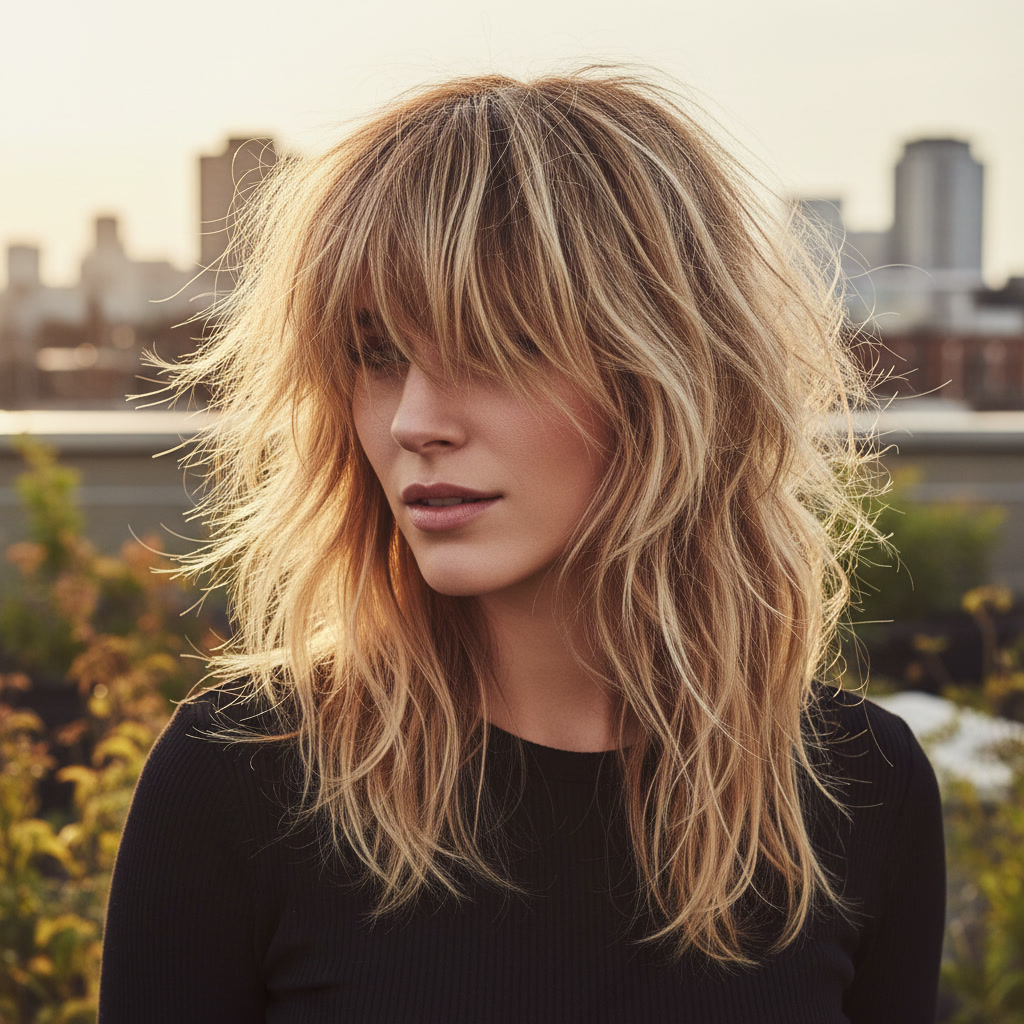
In the world of beauty and fashion, trends come and go with dizzying speed. Yet, every so often, a style emerges that captures the cultural zeitgeist so perfectly that it transcends “fad” status and becomes a modern classic. Enter the Wolf Cut.
Originally popularized in South Korea and catapulted to global fame via TikTok and Instagram, the wolf cut has officially graduated from viral social media trend to a staple request in high-end salons. It is edgy, low-maintenance, and dripping with rock-and-roll attitude.
If you are considering making the chop, or if you are simply curious about why this style has taken over the world, you are in the right place. Here is your professional guide to understanding, styling, and maintaining the ultimate modern haircut.
What Exactly is a Wolf Cut?
To understand the wolf cut, you have to look at its parents. The wolf cut is the ultimate hybrid of two of history’s most iconic rebellious hairstyles: the 1970s shag and the 1980s mullet.
It takes the soft, face-framing, heavily textured layers of the shag and combines them with the shorter-on-the-top, longer-in-the-back silhouette of the mullet. The result is a look that features a lot of volume at the crown and graduates into wispy, feathered layers at the bottom. It almost always includes some variation of bangs—usually curtain bangs or a choppy, piecey fringe—to tie the whole look together.
The name comes from the wild, untamed, and slightly fierce aesthetic the haircut creates. It is designed to look effortlessly messy, perfectly imperfect, and incredibly dynamic.
Why the Wolf Cut Works for Everyone
One of the biggest reasons for the wolf cut’s massive popularity is its sheer versatility. Unlike blunt bobs or geometric cuts that require specific face shapes or hair textures to work, the wolf cut is a shape-shifter. A skilled stylist can customize it to suit almost anyone.
For Round and Square Faces: The heavy layers around the cheekbones and jawline can be strategically placed to contour the face, drawing attention to the eyes and softening strong jawlines.
For Oval and Heart Faces: The volume at the crown balances out proportions beautifully, making it an incredibly flattering choice.
Beyond face shapes, the wolf cut is also wonderfully gender-neutral. It offers a soft, non-binary approach to hair that appeals to anyone looking to express their individuality.

Adapting the Cut to Your Hair Type
Another myth about the wolf cut is that you need a specific hair type to pull it off. In reality, the cut can be adapted to enhance whatever natural texture you have.
1. Curly and Wavy Hair
If you have natural waves or curls, you are the ultimate candidate for a wolf cut. The heavy layering removes the excess weight that often pulls curls down, allowing your natural texture to bounce freely. It creates a gorgeous, voluminous shape without the dreaded “triangle hair” effect.
2. Straight Hair
If you have straight hair, you can absolutely still rock a wolf cut, but it will require a bit more styling. Straight hair needs help creating that piecey, separated look. Your stylist will likely use a razor or texturizing shears to ensure the ends don’t look too heavy or flat.
3. Fine Hair
You might think layers are bad for fine hair, but the wolf cut actually creates the illusion of fullness. By cutting short layers at the crown, it prevents fine hair from laying flat against the scalp, giving you instant volume.
How to Style Your Wolf Cut: A Step-by-Step Guide
The beauty of a well-executed wolf cut is that it should do most of the work for you. However, to get that “cool-girl” or “cool-guy” salon finish at home, follow this simple styling routine:
Step 1: Prep on Damp Hair. After washing, apply a lightweight volumizing mousse or a root-lifting spray to your roots. If you have waves, apply a curl cream to the mid-lengths and ends.
Step 2: Dry the Bangs First. Always style your bangs while they are wet. Use a small round brush to blow-dry them away from your face for that perfect curtain-fringe swoop.
Step 3: Dry for Volume. If you have curly hair, use a diffuser to dry your hair and encourage texture. If you have straight hair, flip your head upside down while blow-drying to get maximum lift at the roots.
Step 4: Add Texture. Once your hair is dry, spray a generous amount of dry texturizing spray or sea salt spray throughout. Scrunch it in with your fingers to create that lived-in, messy look.
Step 5: Detail the Ends. Take a tiny bit of hair wax or pomade, rub it between your fingertips, and pinch the ends of your layers to give them a piecey, defined finish.
Maintenance: Keeping the Edge
Because the wolf cut relies on a specific balance of volume at the top and length at the bottom, it does require some maintenance to keep looking its best.
Expect to visit your stylist every 6 to 8 weeks for a trim. During these appointments, your stylist will focus on reshaping the crown and keeping the bangs at a manageable length. The good news? Because the cut is inherently messy, the grow-out phase is incredibly forgiving. You won’t experience the awkward in-between stages common with more structured cuts.

Final Thoughts
The wolf cut is more than just a passing internet trend; it is a celebration of texture, movement, and individual expression. It dares you to step away from heat-damaged, pin-straight styles and embrace a look that is full of life and personality.
Leave a Reply